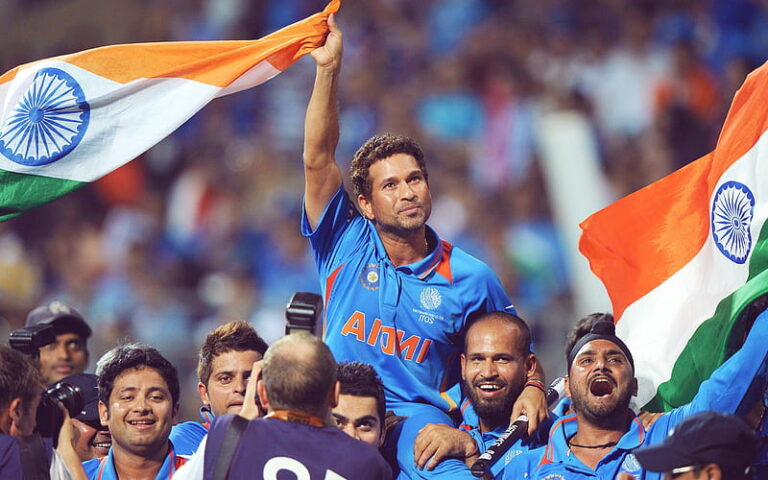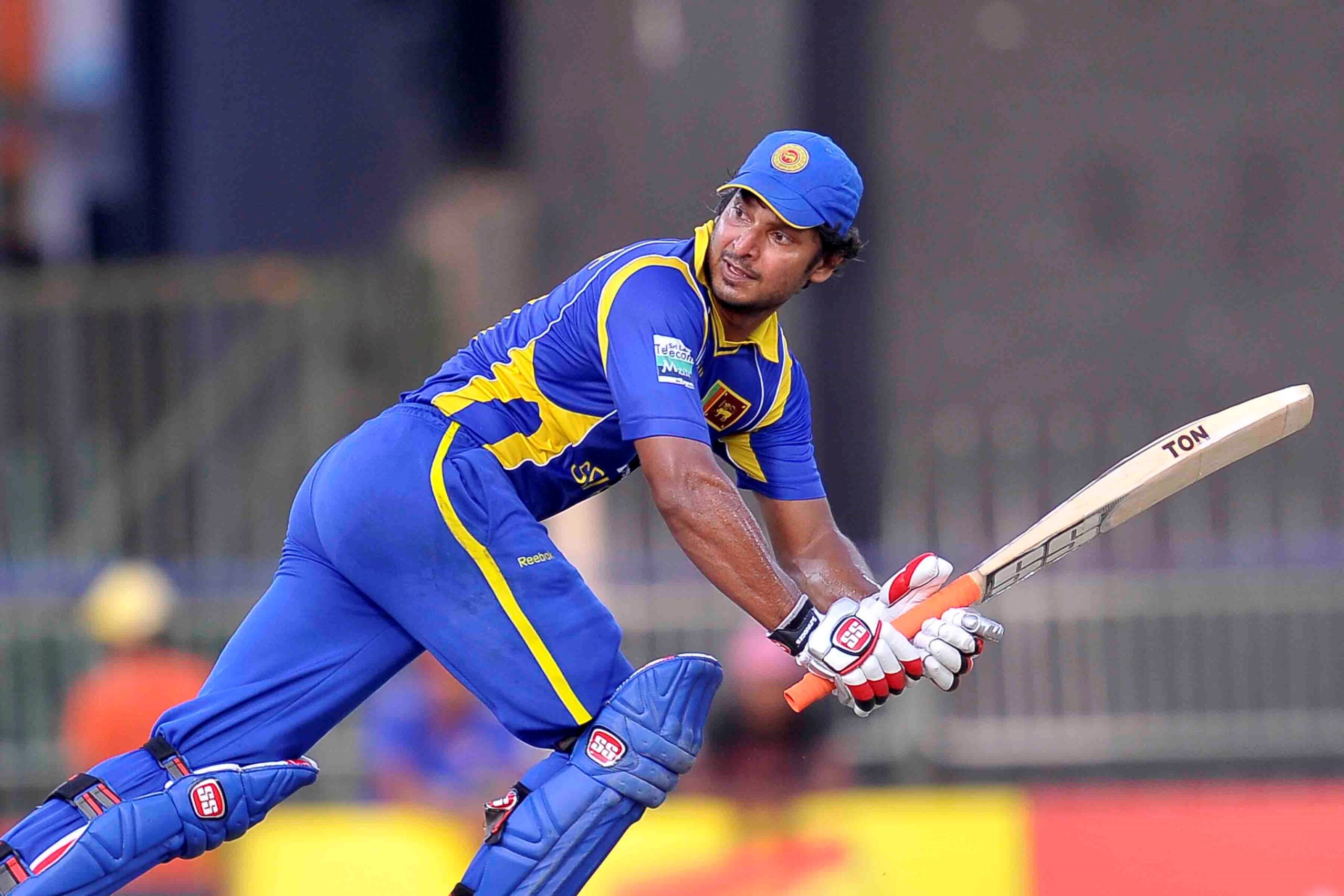
Unanimously called the “batsmen’s game”, cricket has enthralled and awed its fans with an array of masterful strokes and footwork over the generations. Cricket is considered one of the most played sports around the globe and has grown by leaps and bounds since its establishment in 1726. To score and be called one of the world’s best batsmen, you need more than just skill; you need grit, composure, and the ability to shine as the bright light of the game. Every cricketer makes a tremendous effort to be on the list of the greatest batsmen of all time. Boasting astounding averages along with the ability to rake in consistent performances by having a single-handed impact on their team’s results, these batsmen have made it to the list of the top 10 greatest batsmen across all generations.
10. Virat Kohli (India)
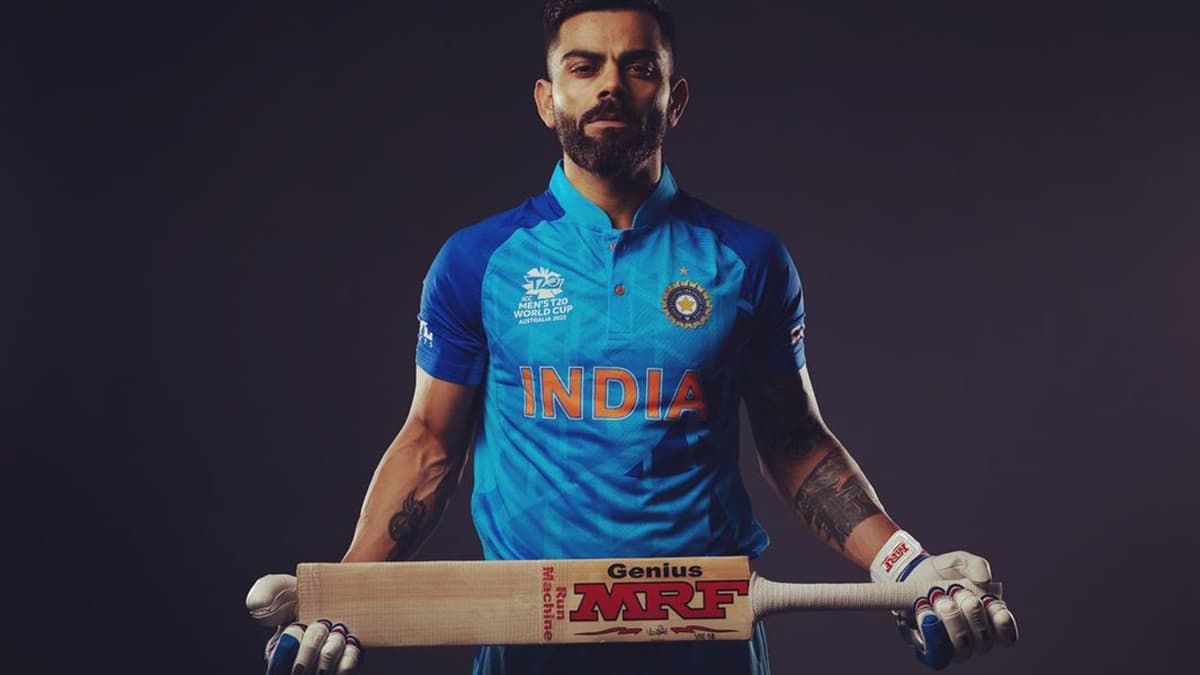
- Tests – 113
- Runs – 8,848
- Average – 49.16
- 100s – 29
- Highest Score – 254
Virat Kohli’s hunger and passion for success made him one of the best cricketers in the world. Moreover, he has become the most consistent all-format accumulator by playing proper cricket shots and not just power-hitting. Although V. Kohli is yet to retire, he has already won millions of hearts and has embedded his name in the list of world’s best batsmen.
9. Ricky Ponting (Australia)
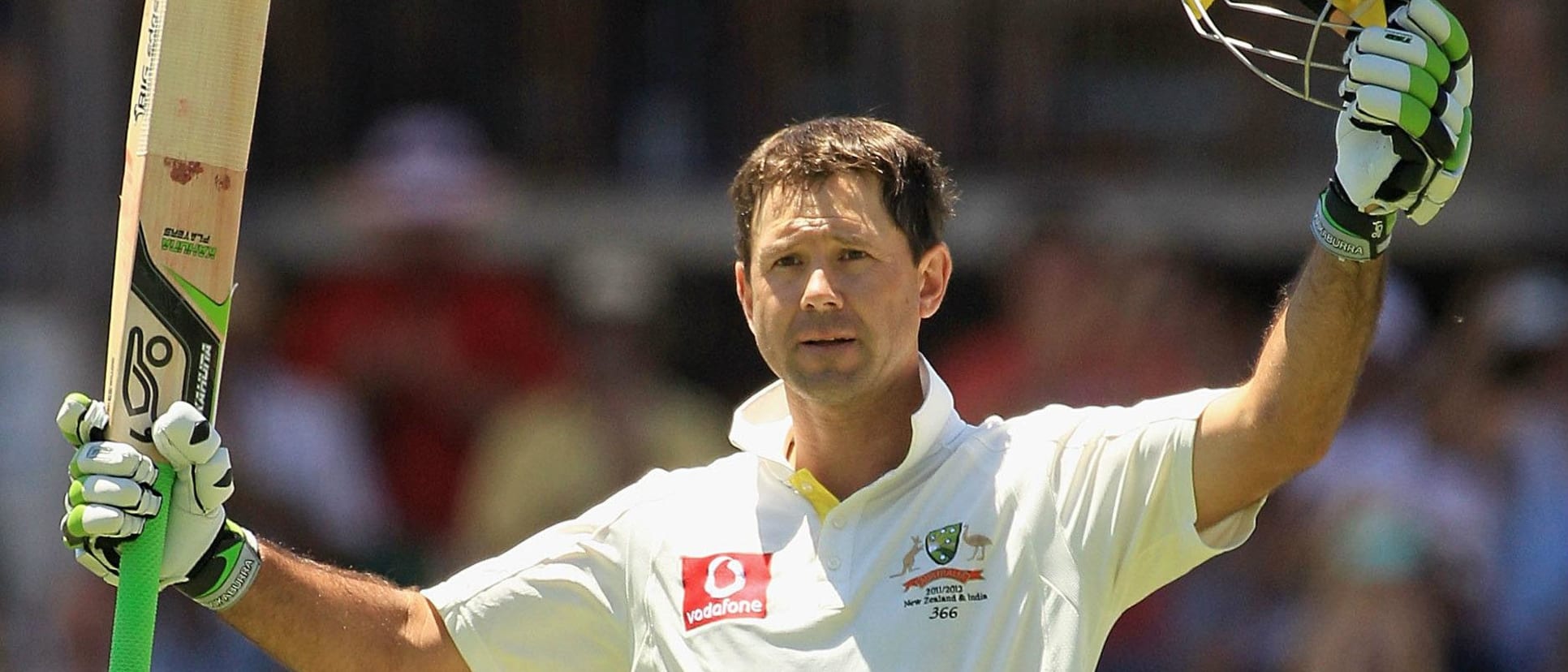
- Tests – 168
- Runs – 13,378
- Average – 51.85
- 100s – 41
- Highest Score – 257
Throughout his career, one of the best qualities that made Ricky Ponting one of the best batsmen in the world was his burning desire to succeed in matches. Because of his perfect pull shot, Ponting is recognized as one of the best batsmen in the world.
8. Sunil Gavaskar (India)
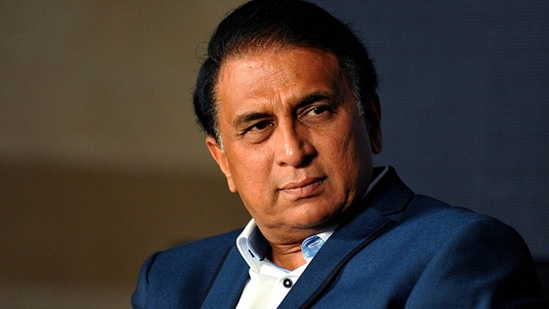
- Tests – 125
- Runs – 10,122
- Average – 51.12
- 100s – 34
- Highest Score – 236*
Sunil Gavaskar was statistically the most successful opening batsman and is perhaps one of the best openers of all time. Long before Tendulkar captured the imagination of the Indian sphere, Gavaskar treaded the path to stardom; inspiring a nation to rub shoulders with the giants in the game. His batting was distinguished by excellent technique, unwavering focus, and, most significantly, audacious nerve. In an age of the fearsome West Indies pacers, he used to play without a helmet. He did this for 16 years and scored over 10,000 Test runs.
7. Sir Vivian Richards (West Indies)
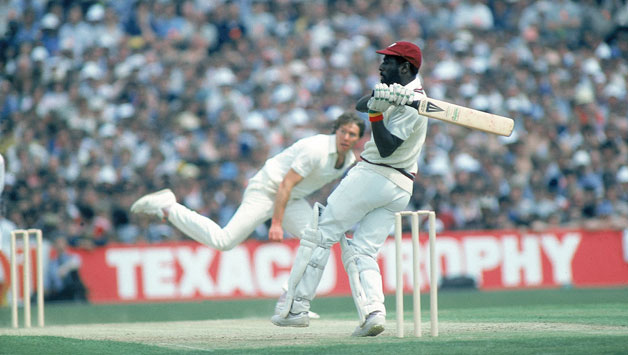
- Tests – 121
- Runs – 8,540
- Average – 50.24
- 100s – 24
- Highest Score – 291
Sir Vivian Richards made his debut in 1974 and has been known for his destructive batting style, with many describing him as a swagger. Viv Richards, with his inane tendency to thwart the bowling attack all over the park, earmarked a name for himself as the most intimidating and dominating batsman that the bowlers had faced, long before the likes of Sehwag and Gilchrist entered the arena. In the early 1970-1980s, aggressive batting was never a thing, but all of this changed whenever Vivian stepped on the field. He never even wore a helmet while playing throughout his whole career.
6. Kumar Sangakkara (Sri Lanka)
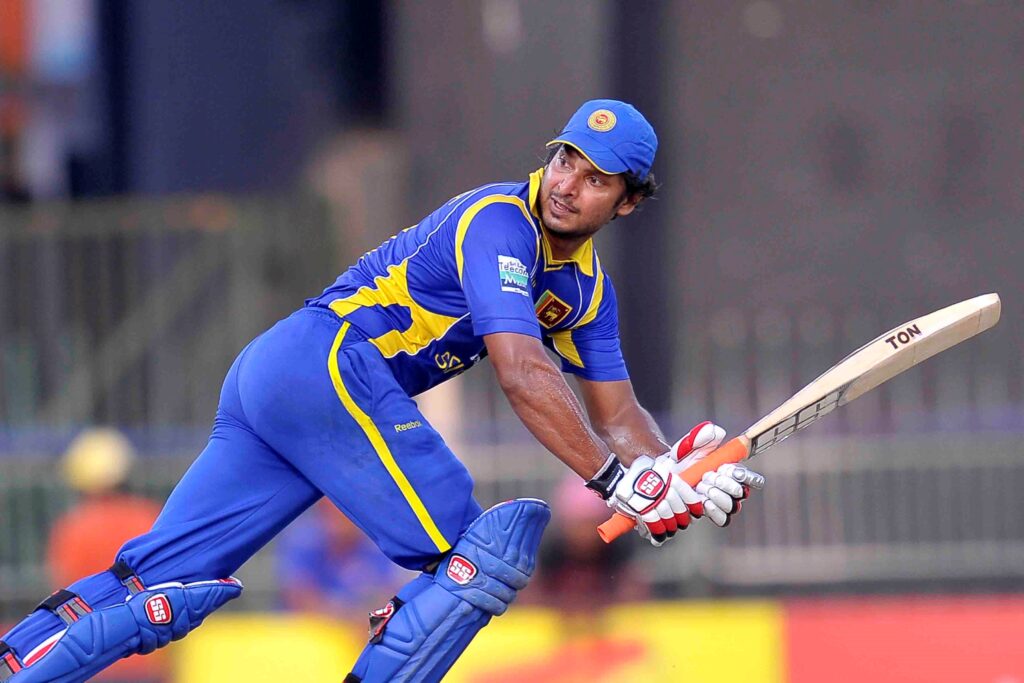
- Tests – 134
- Runs – 12,400
- Average – 57.14
- 100s – 38
- Highest Score – 319
Kumar Sangakkara started his career with a fierce 156 against Zimbabwe. Sangakkara is an excellent stroke player, a praiseworthy wicketkeeper, and a quick and sharp thinker of the game. He is among very few batters who have scored 10,000+ runs in both Tests and ODIs, which is an incredible feat.
5. Brian Lara (West Indies)

- Tests – 131
- Runs – 11,953
- Average – 52.89
- 100s – 34
- Highest Score – 400*
Faced with the uphill task of reviving the fortunes of West Indian cricket after it had threatened to plunge into the abyss, Brian Lara had the dual duty of replicating the brilliance that had been set by the likes of Sobers, Richards and George Headley. Brian Lara is considered one of the greatest left-handers to have ever played the game of cricket. During his playing time, he was a ruthless batsman who whipped the talented bowlers with his excelling batting skills. Ending his career with two first-class scores in excess of 400, the Trinidadian provided the audience with a glimpse of the power that West Indies cricket once boasted of.
4. Sir Walter Hammond (England)
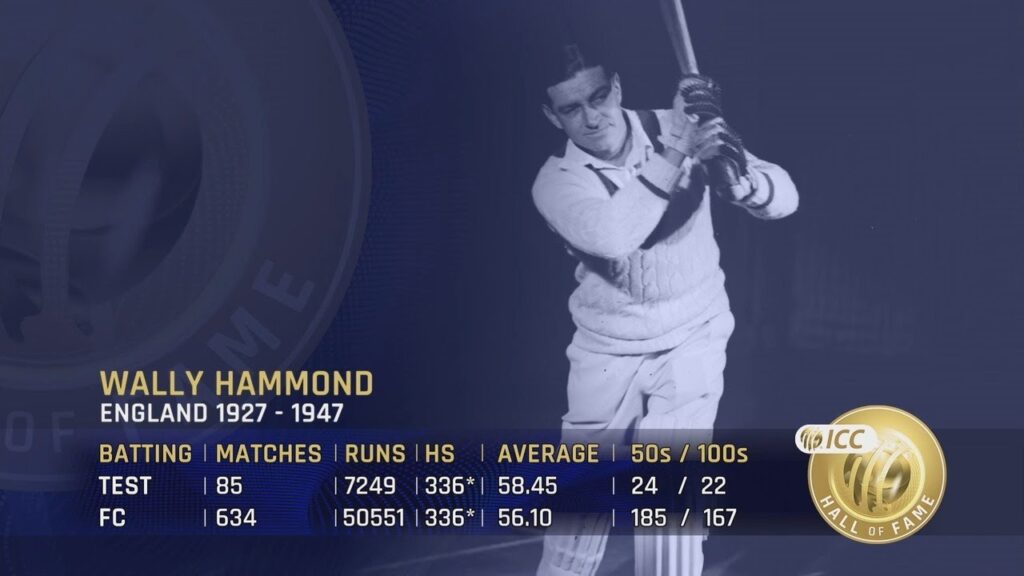
- Tests – 85
- Runs – 7,249
- Average – 58.4
- 100s – 22
- Highest Score – 336*
Sir Walter Hammond’s greatness can be summed up by the fact that he was constantly compared with Don Bradman as the greatest batsman of the pre-war era. English-based batsman Sir Wally Hammond was known for his exceptional, unmatched, and unflappable batting abilities. Widely accepted as England’s best batsman with 22 centuries, which was only recently overhauled by Alastair Cook, Hammond held the world record for the most Test runs at the time of his retirement.
3. Sir Jack Hobbs (England)
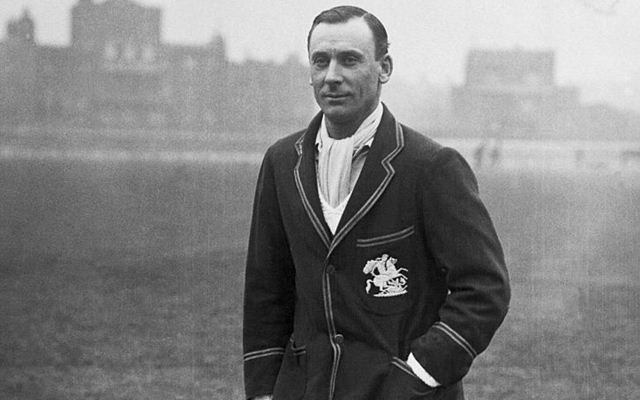
- Tests – 61
- Runs – 5,410
- Average – 56.95
- 100s – 15
- Highest Score – 211
Known as “The Master,” Sir Jack Hobbs is widely considered one of the greatest batsmen in cricket history. The original ‘Master’ of cricket, Hobbs was a pioneer of the sport, introducing a number of shots to his armory. Sans professional coaching, Hobbs was the first batsman to average over 50 in Test cricket and the first cricketer to be knighted by the Queen. With 199 centuries in competitive cricket and seven Test centuries after the age of forty, including a hundred at 46, Sir Hobbs remains a pivotal influence for modern-day batsmen.
2. Sachin Tendulkar (India)

- Tests – 200
- Runs – 15,921
- Average – 53.78
- 100s – 51
- Highest Score – 248*
When talking about the world’s No. 1 batsman, discussion must begin with Sachin Tendulkar. He was India’s savior, the go-to man when in distress. Solely shouldering the responsibility of the mass Indian population for two and a half decades, Tendulkar’s greatness lay beyond the record books and his logic-defying consistency. He is the only cricketer to have scored 100 centuries, with fans calling him the man of 100 hundred in cricket.
1. Sir Donald Bradman (Australia)

- Tests – 52
- Runs – 6996
- Average – 99.94
- 100s – 29
- Highest Score – 334
Finishing with an average that has become the most well-known sports record, Bradman’s aura made him a benchmark in the world of cricket. Australia and the whole world can never forget Sir Donald Bradman, the man who portrayed cricket as one of the greatest games of all time. Throughout his 20-year career, he established a standard for all aspiring cricketers around the globe. Had he not been dismissed for a golden duck in his final game and scored just 4 runs, he would have reached an average of exactly 100.
The criteria of a minimum of 50 Test matches sees the unfortunate absence of West Indian George Headley, also referred to as the ‘Black Bradman’, and South African Graeme Pollock, both of whom bore the responsibility of their respective teams, averaging well over 60 in the Test matches they participated in.