Cricket has always evolved, but every now and then, a rare individual comes along who doesn’t just succeed within the system they bend the system around themselves. These are the players who changed cricket forever, not by accident or luck, but by forcing the sport to rethink what was possible. Their influence went far beyond runs scored or wickets taken. They altered mindsets, redefined roles, and reshaped how future generations approached the game.
Across different eras and conditions, five cricketers stand out for fundamentally transforming how cricket is played and understood. Their impact still echoes in modern tactics, team selections, and even the way young cricketers are coached today.
How Individual Brilliance Reshapes a Team Sport
Cricket may be a team game, but its history proves that one extraordinary player can tilt the balance of an entire era. Tactical revolutions in cricket rarely begin in boardrooms; they begin in the middle, with a bat or ball in hand. When a player succeeds consistently with a new approach, others are forced to adapt or fall behind.
What unites the legends discussed here is not just greatness, but disruption. Each one challenged a long-held belief about how cricket should be played.
Sir Vivian Richards: Fearlessness Becomes a Weapon

Before Sir Vivian Richards, aggression in batting was often seen as reckless, especially in international cricket. Scoring quickly was secondary to survival. Richards demolished that mindset with swagger, dominance, and an unshakable belief that bowlers were meant to be attacked.
Redefining Batting Intent
Richards didn’t wait for bad balls. He turned good deliveries into scoring opportunities and made fast bowling look ordinary. Without helmets for much of his career, he stared down some of the quickest bowlers in history and imposed himself mentally before the contest even began.
His approach changed how success in limited-overs cricket was measured. Strike rate began to matter as much as average, especially for top-order batters. Modern power hitters owe a significant debt to Richards’ unapologetic aggression.
A Cultural Shift in Confidence
Beyond numbers, Richards transformed West Indies cricket psychologically. His dominance gave teammates freedom and belief, turning the side into an intimidating force. Opponents weren’t just facing a team they were facing an attitude.
Wasim Akram: Swing Bowling Reimagined
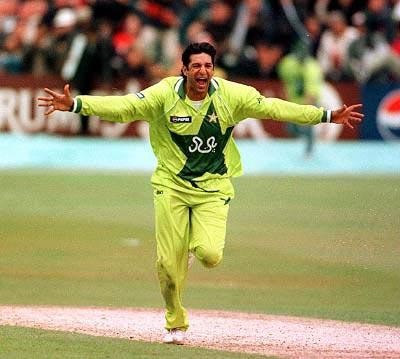
Fast bowling once revolved around raw pace. The faster you bowled, the more dangerous you were considered. Wasim Akram challenged that assumption and proved that control, movement, and intelligence could be even more lethal.
The Science of Swing
Akram mastered late swing at high speed, both conventional and reverse, making the ball move in ways batsmen couldn’t predict. What made him special wasn’t just the swing itself, but his ability to deploy it with precision across different conditions.
He showed that fast bowling could be an art form one built on subtle changes in grip, wrist position, and release angle. Today’s swing bowlers, especially in subcontinental and English conditions, are following a blueprint he helped perfect.
Influence Beyond Pakistan
Akram’s methods became study material for aspiring fast bowlers worldwide. His legacy lives on in coaching manuals, commentary discussions, and the technical foundations of modern pace bowling.
Shane Warne: The Revival of Leg Spin
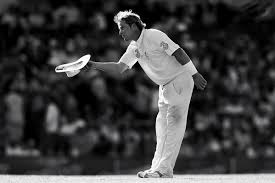
Leg spin was once considered too risky for consistent success at the highest level. Shane Warne not only revived it he made it essential.
Turning Risk into Control
Warne’s genius wasn’t just the amount of turn he generated, but how he controlled it. Flight, drift, dip, and sharp deviation worked together to outthink batsmen. He attacked rather than defended, even on flat pitches.
His ability to set up dismissals over multiple deliveries elevated spin bowling into a chess match. Batsmen were forced to plan several balls ahead, often unsuccessfully.
Inspiring a Generation
After Warne, teams actively searched for leg spinners again. Young bowlers who might have abandoned the craft now had a role model proving that wrist spin could dominate world cricket. Even today, every emerging leg spinner is measured fairly or unfairly against the standards he set.
Adam Gilchrist: Reinventing the Wicketkeeper’s Role

For decades, wicketkeepers were selected primarily for their glovework. Batting was a bonus, not a requirement. Adam Gilchrist flipped that equation completely.
A New Team Balance
Gilchrist didn’t just contribute with the bat he altered team composition. His ability to score rapidly from the lower middle order allowed teams to play an extra bowler or strengthen their top order.
Opening the batting in Tests as a wicketkeeper was once unthinkable. Gilchrist made it devastatingly effective.
Setting a Global Standard
After Gilchrist, wicketkeepers were expected to be genuine match-winners with the bat. Modern international cricket simply doesn’t allow specialist keepers who can’t bat. That expectation traces directly back to his success.
Sanath Jayasuriya: The Birth of Aggressive Opening
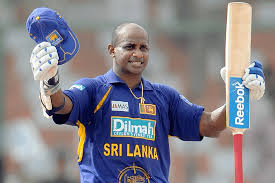
Opening batsmen were once protectors players whose job was to survive the new ball. Sanath Jayasuriya transformed the role into one of destruction.
Exploiting the Powerplay
Jayasuriya realized early that fielding restrictions were an opportunity, not a danger. He attacked from the very first over, forcing captains to rethink bowling plans and defensive fields.
This approach changed how teams structured their innings. A fast start became a strategic advantage rather than an unnecessary gamble.
A Template for Modern Openers
Today’s aggressive openers in white-ball cricket are following a path Jayasuriya carved out years earlier. The concept of maximizing the first ten overs is now fundamental strategy, not experimentation.
The Lasting Impact on Modern Cricket
What links these five icons is not just brilliance, but influence. The tactics they introduced are no longer innovations they are expectations. Coaches train players with these philosophies baked into development programs. Selection committees build squads assuming these roles exist.
The players who changed cricket forever did so by proving that the game’s unwritten rules were flexible. Once those boundaries were broken, there was no going back.
You can see their fingerprints everywhere:
- Aggressive intent valued over passive accumulation
- Skill and intelligence prioritized alongside athleticism
- Multi-dimensional players preferred over specialists
These shifts didn’t happen overnight, but they became permanent because these players succeeded at the highest level, repeatedly and decisively.
Why True Game-Changers Are Rare
Talent alone doesn’t change a sport. To reshape cricket, a player must combine skill, courage, and consistency often in the face of skepticism. Every name on this list faced doubts early on. What separated them was their refusal to conform.
That is why the list of players who changed cricket forever is short. Many great players leave records. Only a few leave revolutions.
Conclusion: When Greatness Becomes Legacy
Cricket continues to evolve, and new formats will bring new innovations. Yet, the foundations of modern cricket rest heavily on the shoulders of these five pioneers. They didn’t just win matches; they rewrote manuals, redefined roles, and reshaped how the game is imagined.
Long after statistics fade into archives, their influence remains alive every time an opener attacks from ball one, a wicketkeeper changes a game with the bat, a fast bowler bends the ball late, or a leg spinner tosses one up with confidence.
That is the true mark of greatness not just excellence, but transformation.