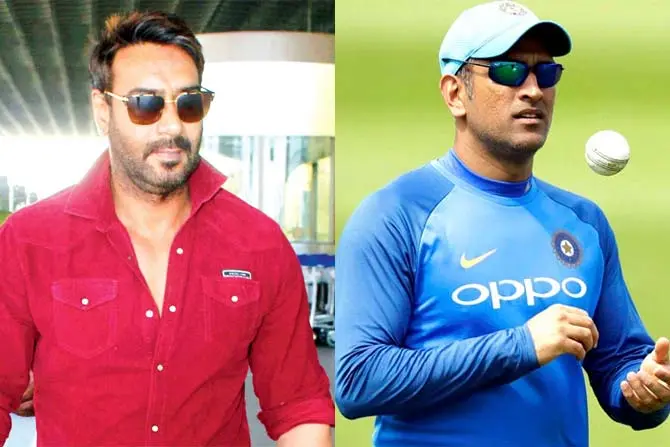
Cricket has always shared a deep emotional bond with Indian cinema, and few Bollywood stars express that connection as naturally as Ajay Devgn. Known for his grounded personality and understated intensity on screen, Devgn’s admiration for the sport feels authentic rather than performative. When he recently spoke about the players he admires most, the conversation quickly resonated with fans across both film and cricket circles. Ajay Devgn favorite cricketers, as he openly stated, are MS Dhoni and Rohit Sharma two captains who have shaped modern Indian cricket in very different yet equally influential ways.
This wasn’t a casual name-drop or a fleeting soundbite. Devgn’s choices, echoed by filmmaker Rohit Shetty, reflect a deeper appreciation of leadership, temperament, and longevity. Alongside Dhoni and Rohit, Devgn also mentioned contemporary stars like Suryakumar Yadav and Jasprit Bumrah, as well as his childhood hero Kapil Dev. Together, these names sketch a broader picture of what excellence in Indian cricket looks like across generations.
Bollywood’s Longstanding Love Affair With Cricket
The overlap between Bollywood and cricket is not new. For decades, actors, directors, and producers have openly followed the game, attended matches, and even invested in teams. Cricket mirrors cinema in many ways: both thrive on pressure, narrative arcs, heroes, failures, and dramatic comebacks. For someone like Ajay Devgn, who has sustained a career across three decades, it’s natural to gravitate toward cricketers who embody consistency and mental strength.
Devgn and Rohit Shetty, who have collaborated on multiple blockbuster films including the Singham franchise, recently appeared together on a popular YouTube show where their shared enthusiasm for cricket took center stage. Their discussion felt less like celebrity chatter and more like a fan’s honest breakdown of what makes certain players special.
Why MS Dhoni Commands Unmatched Respect
MS Dhoni’s name inevitably dominates any discussion about leadership in Indian cricket. Although he retired from international cricket years ago, his influence has hardly faded. Dhoni’s appeal lies not just in his achievements, but in how he achieved them.
As a captain, Dhoni led India to multiple ICC trophies, handled high-pressure situations with remarkable calm, and backed players when few others would. Rohit Shetty’s admiration for Dhoni centered on these exact qualities. He highlighted Dhoni’s ability to stay composed until the very last ball, emphasizing that there is more to learn from Dhoni’s attitude and planning than from raw statistics alone.
Dhoni’s calm presence behind the stumps, his unconventional decision-making, and his refusal to panic under pressure have made him a case study in leadership far beyond cricket. Business leaders, coaches, and even filmmakers often cite Dhoni as an example of clarity under chaos. It’s no surprise that both Devgn and Shetty view him not just as a sports icon, but as a source of inspiration.
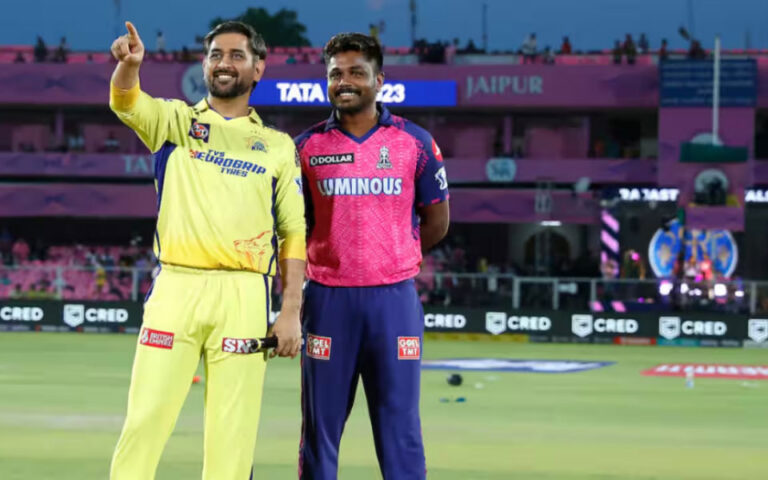
Even today, Dhoni continues to be a central figure in the Indian Premier League. His ongoing association with Chennai Super Kings keeps him in the public eye and reinforces the idea that leadership is not defined by age or retirement status, but by influence and mindset.
Rohit Sharma and the Art of Effortless Excellence
If Dhoni represents ice-cold composure, Rohit Sharma symbolizes effortless dominance. Widely regarded as one of the most naturally gifted batters of his generation, Rohit’s elegance at the crease sets him apart. Ajay Devgn’s fondness for Rohit reflects an appreciation for players who make the difficult look simple.
Rohit’s journey has not been without setbacks. Early in his career, questions were raised about his consistency and role in the team. Over time, however, he reinvented himself especially in limited-overs cricket becoming one of the most destructive openers the game has seen. His ability to score big hundreds, often converting starts into monumental innings, is a hallmark of his batting.
As a captain, Rohit has also carved out his own legacy, particularly in franchise cricket. His success with Mumbai Indians demonstrated a calm yet assertive leadership style, one that empowers players while maintaining clarity of roles. For someone like Devgn, who values individual excellence without forcing comparisons, Rohit stands out as a complete modern cricketer.
Beyond Dhoni and Rohit: Admiration for Skill and Impact
While Dhoni and Rohit top the list, Ajay Devgn’s appreciation for cricket extends well beyond two names. He spoke fondly of Suryakumar Yadav, whose innovative stroke play has redefined modern T20 batting. Suryakumar’s fearlessness and creativity reflect the evolution of the game, where adaptability is as crucial as technique.
Jasprit Bumrah also earned Devgn’s admiration, and rightly so. Bumrah’s unique action, precision under pressure, and ability to deliver in all formats make him one of India’s most valuable assets. Fast bowlers often carry the burden of expectation, and Bumrah’s consistency at the highest level has set new benchmarks.
Devgn also mentioned Kapil Dev, acknowledging him as a childhood hero. Kapil’s legacy as the captain who led India to its first World Cup victory in 1983 continues to inspire generations. Including Kapil Dev alongside contemporary stars underscores Devgn’s respect for cricketing history and the foundations upon which today’s success is built.
Rohit, Kohli, and Individual Brilliance
When asked about Rohit Sharma and Virat Kohli as a pair, Devgn offered a thoughtful response. Rather than framing them as a duo, he emphasized their individual brilliance. This perspective is refreshing in an era where comparisons often dominate sports discourse.
Both Rohit and Kohli have defined modern Indian batting in their own ways. Kohli’s intensity, fitness standards, and relentless pursuit of excellence contrast with Rohit’s relaxed elegance and timing. Devgn’s refusal to compare them highlights an important truth: greatness in sport does not follow a single template.
Cricketing Icons and the IPL Factor
Another reason these players remain constantly relevant is their continued presence in the Indian Premier League. Dhoni, Rohit, and Kohli are not just international legends; they are also franchise icons. Their retention by their respective teams ahead of the IPL 2025 season reinforces their commercial and sporting value.
Dhoni’s ongoing role with Chennai Super Kings, Rohit’s association with Mumbai Indians, and Kohli’s long-standing connection with Royal Challengers Bengaluru ensure that fans across generations remain emotionally invested. The IPL has become a platform where experience meets youth, and these veterans play a crucial role in shaping team culture.
Leadership Lessons That Transcend Sport
What truly unites Ajay Devgn favorite cricketers is not just talent, but temperament. Dhoni’s strategic calm, Rohit’s understated authority, Kapil Dev’s fearless optimism, and Kohli’s intensity all represent different leadership philosophies. Together, they show that there is no single path to success.
For actors and filmmakers, these qualities resonate deeply. Cinema, like cricket, demands teamwork, resilience, and the ability to perform under scrutiny. It’s easy to see why figures like Devgn and Shetty draw inspiration from cricketers who thrive in high-pressure environments without losing their sense of self.
The Enduring Bond Between Fans, Films, and the Game
At its core, Ajay Devgn’s comments remind us why cricket occupies such a unique place in Indian culture. It’s not just about runs, wickets, or trophies. It’s about attitude, perseverance, and the stories that unfold over time.
By openly expressing his admiration for Dhoni, Rohit, and others, Devgn reinforces the idea that true icons are defined by more than momentary success. They are remembered for how they carry themselves, how they lead, and how they inspire those watching from the stands or from entirely different professions.
As cricket continues to evolve, new stars will emerge and records will be broken. Yet the qualities that Ajay Devgn favorite cricketers embody calm under pressure, respect for the game, and unwavering self-belief will remain timeless.