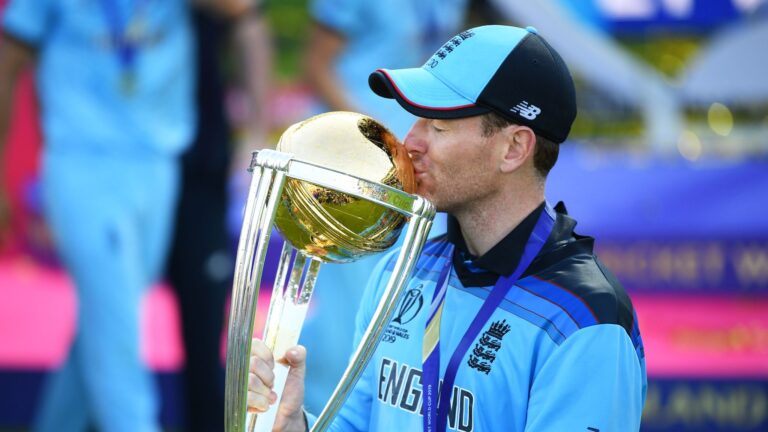
When a modern great speaks about the players who shaped his understanding of the game, people listen. Eoin Morgan All-Time XI is not just another fantasy lineup built on raw numbers or popularity. It reflects the worldview of a leader who played in an era of rapid change, innovation, and intense competition. Morgan’s selection criteria were deeply personal: players he competed against, shared dressing rooms with, or drew inspiration from during his career. That lens alone explains why this XI feels refreshingly different and why it stirred debate across the cricketing world.
Rather than aiming to please everyone, Morgan assembled a team that balances class, resilience, adaptability, and match-winning ability. Some legendary names are absent, while others take center stage, reminding us that greatness in cricket is often subjective and shaped by lived experience.
Understanding Morgan’s Selection Philosophy
Before diving into the names, it’s important to understand the framework behind the team. This XI was not designed as a statistical “best of all time” list. Morgan openly leaned on influence, impact, and firsthand experience. Players who affected the way he thought about the game, challenged him on the field, or set benchmarks during his career naturally found favor.
That approach explains both the inclusions and the omissions. It also makes the XI more conversational than clinical a blend of personal respect and professional admiration rather than a spreadsheet exercise.
Opening the Innings: Reliability Meets All-Round Excellence
Alastair Cook (Captain)
At the top sits Alastair Cook, entrusted with both opening duties and leadership. Cook’s inclusion feels instinctive. He embodied consistency in an era where longevity at the highest level became increasingly rare. His temperament, patience, and ability to bat time made him a natural leader of this side.
Beyond the numbers, Cook represented control. He wore down bowling attacks, set foundations, and led England through periods of transition. As captain of this XI, he symbolizes stability and calm authority.
Jacques Kallis
Partnering Cook is Jacques Kallis, arguably one of the most complete cricketers the game has seen. His presence immediately gives the side balance. Kallis could adapt to any situation grinding out runs when needed or accelerating when the moment demanded.
More than an opener, Kallis is the glue of the batting order. His ability to contribute significantly with the ball adds depth and flexibility, qualities any captain would cherish in an all-time lineup.
The Middle Order: Authority, Flair, and Adaptability
Ricky Ponting
Few players defined dominance like Ricky Ponting. In Morgan’s XI, Ponting represents authority in the middle order. His aggressive intent, especially against high-quality attacks, set the tone for one of the most successful eras in Australian cricket.
Ponting’s inclusion also reflects leadership under pressure. He didn’t just score runs he imposed himself on matches and opponents, an attribute Morgan clearly values.
Brian Lara
Every great team needs artistry, and Brian Lara provides exactly that. Lara’s ability to turn batting into spectacle while still delivering match-winning performances makes him indispensable.
What sets Lara apart is his capacity to carry teams on his shoulders. He could change the momentum of a game single-handedly, a trait that earns him a permanent place in any serious discussion of cricketing legends.
AB de Villiers
Slotting into the middle order is AB de Villiers, the ultimate modern innovator. His batting redefined what was possible, especially in limited-overs cricket. Unorthodox yet technically sound, de Villiers forced bowlers to rethink conventional strategies.
For Morgan himself a pioneer of aggressive ODI cricket AB’s influence is easy to understand. He represents adaptability, creativity, and fearlessness rolled into one.
Experience and Composure in the Lower Middle Order
Kumar Sangakkara
Kumar Sangakkara adds elegance and intelligence to the lineup. A player equally comfortable anchoring an innings or accelerating when required, Sangakkara’s value goes beyond aesthetics.
His understanding of the game, combined with consistency across conditions, makes him a natural stabilizer in this XI. He bridges eras, blending classical technique with modern demands.
MS Dhoni (Wicket-Keeper)
Behind the stumps and in the lower middle order sits MS Dhoni, chosen for his calmness and unmatched finishing ability. Dhoni’s leadership style quiet, instinctive, and unflappable has influenced an entire generation.
As a wicket-keeper, he brought sharp decision-making and lightning-fast reflexes. As a batter, he mastered the art of closing out games, making him invaluable in tight situations.
The Bowling Unit: Variety, Skill, and Relentless Pressure
Anil Kumble
Anil Kumble’s selection underlines the importance of discipline and persistence. Not a flashy spinner, Kumble succeeded through accuracy, intelligence, and relentless pressure.
In an all-time XI filled with attacking flair, Kumble provides control. He could hold up an end, break partnerships, and adapt to different pitches a priceless asset in any era.
James Anderson
James Anderson brings swing, subtlety, and sustained excellence. His mastery of seam bowling, particularly in helpful conditions, made him a constant threat even late into his career.
What stands out is his evolution. Anderson adapted his game repeatedly to remain effective, a trait that resonates with Morgan’s emphasis on longevity and influence.
Dale Steyn
If Anderson represents finesse, Dale Steyn embodies raw pace and aggression. At his peak, Steyn was a nightmare for batters, combining speed, movement, and relentless intensity.
His ability to strike early and intimidate opponents makes him the spearhead of this attack. Few bowlers have dictated terms as consistently as Steyn did.
Mitchell Johnson
Rounding out the XI is Mitchell Johnson, whose impact often transcended statistics. Johnson’s spells could alter the course of entire series. His left-arm pace and hostility added a different dimension to the attack.
Morgan’s inclusion of Johnson reflects respect for momentum-shifting players those who can change the emotional and tactical balance of a match within a few overs.
A Team Built on Balance, Not Nostalgia
What makes this selection compelling is its balance. The batting combines patience, aggression, and innovation. The bowling attack offers variety across pace, swing, spin, and intimidation. Fielding standards would be elite, and leadership options abound.
The absence of certain icons has sparked debate, but that’s precisely the point. Eoin Morgan All-Time XI is not about consensus; it’s about perspective. It tells us as much about Morgan’s cricketing journey as it does about the players themselves.
Why This XI Resonates in the Modern Era
This team feels particularly relevant today. Many of these players thrived during periods of transition, adapting to new formats, strategies, and expectations. That adaptability mirrors the evolution of modern cricket, where versatility often outweighs specialization.
Morgan’s XI quietly emphasizes mental strength players who handled pressure, led from the front, and influenced how the game was played around them.
Final Thoughts
All-time XIs will always divide opinion, but that’s what keeps cricket conversations alive. Morgan’s selections challenge fans to think beyond nostalgia and raw numbers, focusing instead on influence, adaptability, and impact.
Seen through that lens, this XI makes perfect sense. It’s a team shaped by experience, respect, and a deep understanding of what it takes to win at the highest level. And whether or not you agree with every name, the discussion it sparks is a reminder of why cricket’s history remains endlessly fascinating.