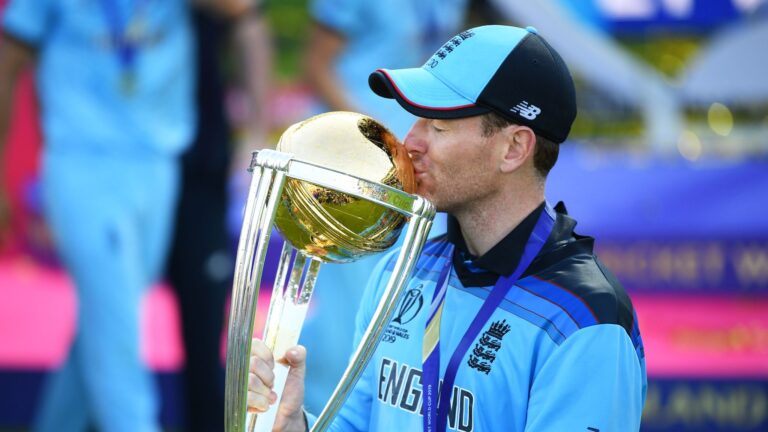
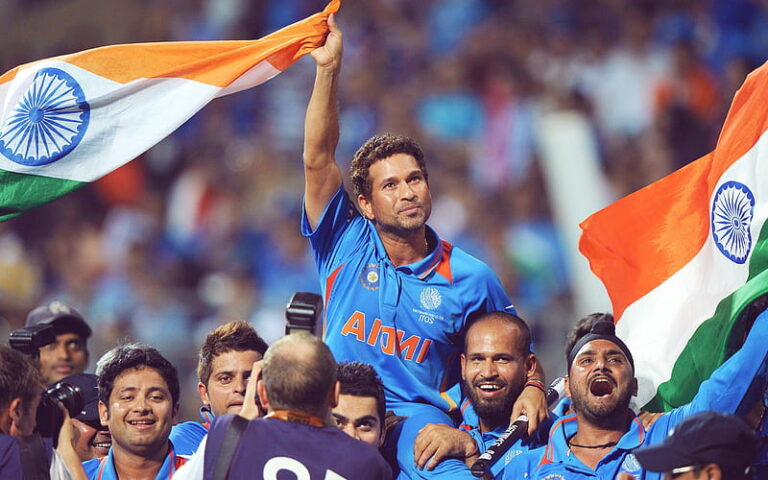
Cricket, a sport enjoyed by millions globally, can seem complicated to new viewers. It has its own unique terms and rules that are complex and have many exceptions. But to enjoy a day of cricket, one only needs to know a few key things, mainly how scoring works. This article will explain just that.
Table of Contents
Basic Scoring
The score in cricket is shown as the number of runs a team scores compared to the number of wickets they lose. For example, if a team scores 100 runs and loses 3 wickets, the score is written as 100-3.

Runs
Runs are the primary way to score in the game. A batter scores one run by hitting the ball and running to the other end of the pitch. They can try to run more than once but must reach the other end before a fielder hits the wicket with the ball. If they fail, they are run out.
There are also two types of boundaries, which automatically award the batting team runs:
- Four: The batter hits the ball over the boundary after it bounces once, scoring four runs.
- Six: The batter hits the ball over the boundary without it bouncing, scoring six runs.
Wickets
A wicket occurs when a batter is dismissed and must leave the field. There are ten ways a wicket can be taken, and after ten wickets, the team is all out, ending their innings.
The most common ways to get a wicket are:
- Bowled: The ball hits the stumps and dislodges the bails.
- Caught: A fielder catches the ball before it bounces after the batter hits it.
- Stumped: The batter leaves the crease and the wicket keeper hits the wicket with the ball in hand.
- LBW: The batter’s leg blocks the ball from hitting the wicket.
- Run out: A fielder hits the wicket at one end of the pitch before a batter completing a run reaches it.
The five less common ways are:
- Hit the ball twice: The batter hits the ball twice with their bat.
- Handled the ball: The batter touches the ball with their hand while it’s in play and their hand isn’t touching the bat.
- Obstructing the field: The batter deliberately gets in a fielder’s way.
- Timed out: The batter takes too long to come to the pitch when it’s their turn to bat.
- Hit wicket: The batter hits their own wicket with their bat or body.

Advanced Scoring
Extras
Extras are runs added to the team’s score that are not earned from runs scored by the batters. They result from fielding errors or penalties. There are four types of extras:
- Wides: A ball bowled too far from the batter for them to hit.
- No balls: An illegal delivery from the bowler, such as bowling from the wrong place.
- Byes: The batter doesn’t hit the ball but successfully runs to the other end.
- Leg byes: The ball hits the batter’s body, and they successfully run to the other end.
Penalty Runs
Penalty runs are added to the batting team’s score if the fielding team breaks a rule. These runs are usually awarded in groups of five and can be given for:
- Bowling overs too slowly
- The ball hitting a fielder’s helmet
- The fielding team tampering with the ball
Strike Rate
Strike rate measures how quickly a batter scores runs. It’s calculated by dividing the number of runs they’ve scored by the number of balls they’ve faced and multiplying by 100.
Overs
An over consists of six balls bowled by a single bowler. In a one-day international match, a bowler can bowl a maximum of ten overs.
Partnerships
A partnership in cricket is the runs scored by two batters who bat together before one of them is dismissed. Partnerships with high run totals indicate that the two batters played well together.
Important Cricket Scoring Rules
There are a few rules that influence how a match plays out:
- Duckworth-Lewis Method: This is a mathematical formula used to set a revised target for the team batting second if a rain delay occurs.
- Decision Review System (DRS): This technology allows teams to challenge an umpire’s decision. Teams are limited in how many times they can use it, and video replays help determine whether the decision should be changed.
Understanding Cricket Terminology
There are many terms unique to the game, such as:
- Innings: Each team’s turn to bat.
- Crease: A marked area in front of the wicket.
- Bails: Two small pieces of wood placed on top of the stumps.
- Wicket keeper: The fielder positioned directly behind the batter.
For more information on terminology, see Understanding Cricket Terminology.
Cricket Formats Explained
Cricket is played in several formats, each with its own rules and scoring system, including:
- Test Cricket: The longest format, played over five days.
- One Day International (ODI): Limited to 50 overs per side.
- Twenty20 (T20): The shortest format, with each side having 20 overs.
For a more in-depth look at the different formats of the game, see Cricket Formats Explained.
Cricket Rules and Regulations

Cricket has many rules that govern how the game is played, including:
- Fielding restrictions
- Bowling regulations
- Signaling for runs
- And many more
To explore the full range of rules and regulations, see Cricket Rules and Regulations.
Cricket Fielding Positions

There are various fielding positions in cricket, each strategically placed to stop runs or take wickets, such as:
- Slips: Positioned behind the batter on the offside.
- Gully: Positioned between slips and point.
- Mid-off and Mid-on: Positioned in front of the batter.
- Fine leg and Square leg: Positioned behind the batter on the leg side.
You can learn more about specific fielding positions and their roles in the game by visiting Cricket Fielding Positions.
Laws of Cricket
The official Laws of Cricket are maintained by the International Cricket Council (ICC) and provide the definitive rules that govern the game.
You can find the complete Laws of Cricket on the MCC website, which is not included in the provided sources.
Reading a Scorecard
Cricket scorecards provide a complete overview of how a match is progressing. A scorecard typically shows the following information:
- Team names
- Batting scores
- Bowling figures
- Fall of wickets
- Partnerships
- Extras
- Totals
Scorecard Components
- Batting scores: Shows each batter’s performance.
- Batsman name: The name of the batter.
- Runs: Total runs scored by the batter.
- Balls faced: Number of deliveries faced by the batter.
- Fours and Sixes: Number of boundaries hit.
- How Out (HO): Method of dismissal.
- Bowling figures: Shows the performance of each bowler.
- Bowler name: Name of the bowler.
- Overs: Number of overs bowled.
- Maidens: Overs bowled without conceding any runs.
- Wickets: Number of batters dismissed.
- Runs conceded: Total runs scored off the bowler.
Reading a Scoreboard
A cricket scoreboard provides a real-time summary of the match. It typically shows:
- Team scores
- Overs bowled
- Wickets lost
- Current batters (on strike and non-striker)
- Run rate
Scoreboard Components
- Batsman on strike: Batter currently facing the bowler.
- Non-striker: Batter at the other end of the pitch.
- Run rate: Average runs scored per over.
Conclusion
Understanding the cricket scoring system is crucial to enjoying the game. By grasping the basic concepts of runs, wickets, and extras, along with more advanced aspects such as strike rate, partnerships, and the Duckworth-Lewis method, viewers can appreciate the intricacies and excitement of this unique sport. Familiarizing oneself with cricket terminology, the different formats of the game, and how to read a scorecard enhances the overall viewing experience. For more details, click here